
First Light, First Roar: Mornings at Ranthambore

A Ranthambore morning safari begins not at the forest gate but the night before with a naturalist briefing, a cold pre-dawn wake-up, and a drive through darkness that ends at a park boundary where the jungle is already mid-conversation about where the tiger is. Understanding what that morning actually involves, hour by hour, changes how you experience it. This guide covers the full arc, from the naturalist's evening briefing to the 10:30 AM return breakfast and what each moment in it means.
The Night Before: What the Briefing Does
Quality resorts near Ranthambore conduct a naturalist briefing the evening before your morning safari. Not a map orientation, an actual read of what is happening in the forest right now.
The naturalist tells you which zones have been active in the last 48 hours, which tigers have been sighted, and what the alarm call patterns suggest about movement. If Zone 1's Raj Bagh lake has had a tigress visiting at dawn over three consecutive mornings, that changes tomorrow completely. You go in with a working theory, not blind hope.
This briefing is the most undervalued part of a Ranthambore trip. Most visitors do not know it exists. The guests who attend leave the next morning with a different quality of attention.
4:30 AM: What the Pre-Dawn Actually Feels Like
There is no gentle version of a Ranthambore winter morning. In November through February, 4:30 AM means 8–12°C with a wind chill from the open jeep that will cut through anything less than a proper fleece and a shawl wrapped across your face. The cold is not dramatic — it is simply present, and it stays with you until the sun clears the Aravalli ridgeline at around 7:30 AM.
In summer (April to June), the same hour is warm and dry. A light layer is enough, and the sky in April has a clarity that winter mist does not always provide. Summer mornings at Ranthambore are quieter, less crowded, and underrated.
What greets you at 4:30 AM regardless of season: a cup of hot chai at the resort, a darkness still fully intact, and the first tentative birdsong from whatever is roosting in the trees outside your tent. The jungle does not roar awake. It begins at a whisper.
The Drive to the Gate: Before the Forest Opens
The 30–45 minute drive from your resort to the safari gate in pre-dawn darkness is its own small experience. Headlights on the road catch chital eyes glowing from the roadside scrub. The road passes through Sawai Madhopur, still asleep, before climbing toward the forest boundary.
Jeep or Canter and why it matters here: A Gypsy jeep carries 6 passengers. A Canter carries 20. At the gate, jeeps enter first. On the forest tracks, a jeep can turn in seconds when an alarm call fires from the left flank; a Canter takes significantly longer to manoeuvre. When a tiger is moving, and the guide needs to position the vehicle quickly, those seconds are everything. The Canter offers a higher sightline and costs less. But for a morning tracking safari where you are following sound and movement through dense cover, the jeep is the better instrument.
Arriving at the gate 15–20 minutes before it opens matters. Being first in the queue means your tyres are the first on the morning tracks. Fresh pugmarks on an undisturbed surface tell a guide far more than ones overlaid by a dozen vehicles before you.
Inside the Park: The First Hour
The park opens 30 minutes after sunrise. Most visitors accept this as a timing rule. It is actually a biological one.
Tigers are nocturnal. They hunt through the night and make their final movements — returning to cover, marking territory, drinking at the lakes — in the hour around dawn. The 30-minute buffer puts you inside the park precisely when tigers are completing this last arc of their night. You are not missing them by arriving after sunrise. You are arriving at the moment they are still moving.
Why tigers walk on jeep tracks in early morning: Their thick fur traps heat, and the forest grass at dawn is heavy with dew. Tigers prefer the dry, flattened surface of a jeep track over wet undergrowth on their paws. In the first hour, fresh pugmarks on the track surface are common. The tiger may have walked this exact path 20 minutes ago.
For photographers: The first 15–20 minutes of golden light is when a moving tiger in open cover produces images that no amount of editing in flat midday light replicates. Priorities: high ISO (1600–3200), fast shutter (1/500 minimum for a walking tiger), widest aperture available, autofocus on continuous tracking. Have these set before you enter the gate.
The Language of the Jungle: Alarm Calls Decoded
The specifics are what make the difference between a guest who hears noise and a guest who understands the forest.
Chital (spotted deer): A sharp, nasal bark — single syllable, repeated rapidly. Signals a ground predator close and moving. When it stops abruptly, the predator has paused or the deer has moved. A chital bark from directly ahead means you turn off the engine immediately.
Sambar deer: A deeper, resonant belling. Sambar are larger and their alarm carries further. Sambar alarm means something large and serious at moderate distance. They do not alarm at small predators.
Langur monkeys: A whooping aerial alarm from the canopy. Langurs call down when a predator is stationary beneath them. A guide hearing langur alarm knows the tiger is not moving — it is resting or waiting. This is when patience pays.
When all three alarm simultaneously from different directions, a guide triangulates. The tiger is in the centre of that triangle.
Zone by Zone: How Morning Behaviour Differs
Zone 1 — Raj Bagh Lakes Area
Tigers come to drink at dawn, and the water reflects orange morning light. Tigresses with cubs are seen moving along the lake edge. Ranthambore Fort is visible over the treeline — the combination of ancient stone and living tiger in one frame is the shot every serious photographer wants.
Zone 3 — Lahpur Corridor
Dense mixed forest, narrow tracks. Alarm calls are your primary tool here. Sightings are often closer — the tiger emerges from thicker vegetation at shorter range. Less scenic than Zone 1, more intense.
Zone 5 — Open Scrubland
High visibility, wide views, but tigers are harder to locate because cover is sparse and they know it. When Zone 5 produces a sighting, the animal often walks in the open for extended periods — the kind of long, unhurried view that dense-zone sightings rarely allow.
When the Tiger Does Not Appear
Not every morning produces a tiger. Anyone who tells you otherwise has not spent enough time in a tiger reserve to be trusted.
What a no-sighting morning still gives you: the crested serpent eagle perched above the Raj Bagh ruins at dawn. Marsh crocodiles warming on the lake banks as the sun hits them. A sloth bear crashing through undergrowth with an indifference to vehicles that the tiger does not share. Over 300 recorded bird species. The landscape itself — Aravalli hills meeting the Vindhya range, a 10th-century fort anchoring the skyline — exists nowhere else. A morning in this forest without a tiger is still a morning in this forest.
The Return: 10:30 AM, Breakfast, and What You Bring Back
The safari ends at approximately 10:30 AM. You return dusty, cold-throated, and either electrified by a sighting or carrying the alertness of a morning spent looking hard at something that did not appear.
At a good resort near Ranthambore, the return includes a debrief. The naturalist asks what you saw and where. He or she provides context — if you saw the female in Zone 1 moving south, that suggests the male has been pushed from her range again. This interpretation converts a safari from a checklist to an understanding.
Over breakfast, other guests compare sightings. Someone from Zone 5 saw Sultan's son on an open track. Someone from Zone 1 had 40 minutes with a tigress and cubs at the lake. The morning distributes itself across the park, and piecing it together over chai and parathas is its own kind of satisfaction.
Where to Stay for the Ultimate Morning Routine — Ranthambore Tiger Machan
The morning described above begins the evening before with a briefing at 4:30 AM with hot chai in the dark, in a warm vehicle driven by someone who knows where the alarm calls were coming from yesterday, and ends at a table where someone helps you understand what you saw.
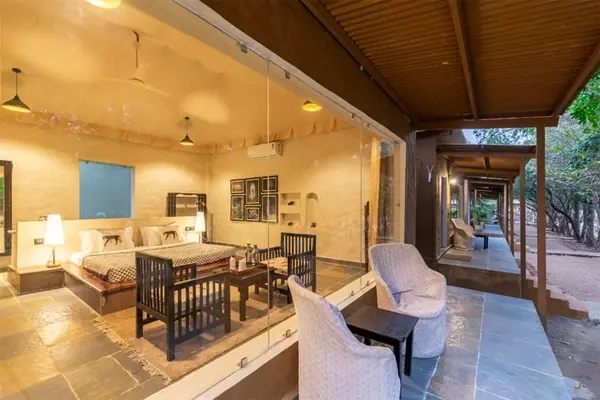
Ranthambore Tiger Machan is positioned 1.5 kilometres from the national park on Ranthambhore Road — close enough that the drive to the gate is short enough to reach first. The property's in-house naturalists conduct the evening briefing and are available for the post-safari debrief. Pre-dawn tea is ready before departure. Maharaja Tents, AC Machan Tents, and cottages across 19 accommodations mean the morning starts in comfort regardless of the winter cold outside.
Among Ranthambore Resorts, RTM's proximity to the park and the depth of its naturalist programme make it the most practical starting point for the kind of morning this guide describes.
FAQs
What time does the morning safari start at Ranthambore and when should I arrive at the gate?
Morning safari timings vary by season. From November to January, gates open at 7:00 AM (30 minutes after sunrise). In October, March, and February, gates open at 6:30 AM, while November through January shifts to 7:00 AM to account for peak winter fog. Arrive at the gate 15–20 minutes before opening. Being first in the queue means your vehicle enters on undisturbed tracks — fresh pugmarks before other vehicles overlay them carry significantly more information for your guide.
Is a jeep or a canter better for a Ranthambore morning safari?
A jeep (Gypsy, 6 passengers) is better for a morning tracking safari. Jeeps enter the park before canters, can navigate narrower tracks, and turn quickly when an alarm call fires from an unexpected direction. When a tiger is moving through cover, and the guide needs to reposition in seconds, a 6-seat jeep does it cleanly. A canter's advantage includes higher sightline and lower cost, but it does not outweigh the positioning disadvantage in dense morning cover.
What is the Golden Hour in a Ranthambore safari and why does it matter?
The Golden Hour refers to the first hour of the morning safari and the last hour of the evening safari. In the morning, this window coincides with tigers completing their final nocturnal movements, returning to cover, drinking, marking territory, before the heat of the day drives them into dense shade. The light during this window is also photographically optimal — low, warm, directional. Tigers are on the move, the jungle is communicating through alarm calls, and the forest has not yet been crossed by a dozen other vehicles. Missing the first hour of a morning safari means missing the highest-probability window.
What should I wear for a Ranthambore morning safari in winter?
In November through February, mornings at Ranthambore are 8–12°C with wind chill from an open jeep amplifying the cold significantly. A thermal base layer, a fleece or warm jacket, a scarf or shawl to cover your face and neck, and a woollen cap are minimum requirements. Gloves help if you are holding a camera. The cold lifts significantly by 9–9:30 AM as the sun rises, so layers you can remove without disruption are more practical than one heavy coat you cannot.


Comments